
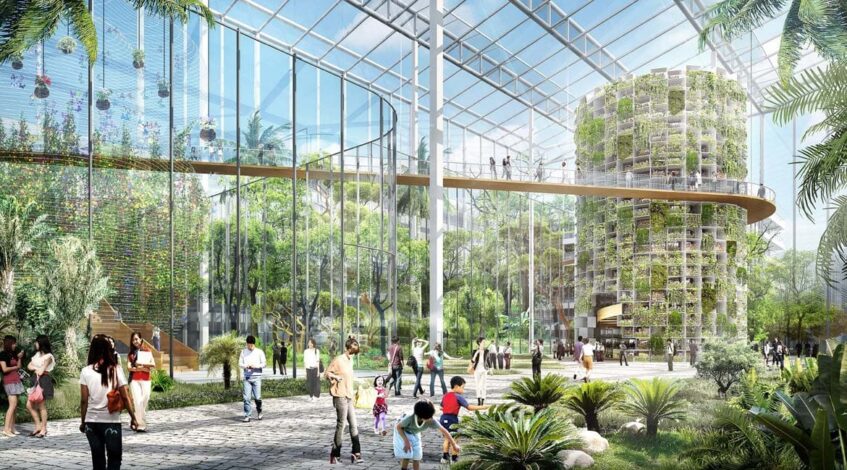
Modern cities are changing rapidly. With growing populations, urban expansion, and a rethinking of lifestyle, questions about future food security are becoming increasingly urgent. How can we feed a metropolis without destroying nature and increasing the carbon footprint? One of the answers to this challenge is vertical farms and urban farming—innovative approaches to agricultural production adapted to the rhythm of 21st-century cities.
In a world where technology permeates every aspect of life — from remote work to digital entertainment and online casinos — it’s no surprise that agriculture has also become part of this transformation. Cities are increasingly becoming not just consumers but also producers of food. And this is not science fiction, but already realized projects in Singapore, Tokyo, New York, and, most recently, Prague.
If you’re looking to enjoy an exciting game of poker or spin the reels, we recommend visiting novecasino.net, where you’ll find trusted gaming platforms with the best bonus programs.
What Are Vertical Farms and Why Are They Important?
Vertical farms are multi-level installations, usually located indoors, where plants are grown not in soil but on racks in a controlled microclimate. Light, humidity, and temperature are all managed by smart systems. This allows for year-round harvesting and reduces water usage by 70–90% compared to traditional farming. It also eliminates the need for pesticides and minimizes transportation losses—food is produced exactly where it is consumed.
Urban farming is a broader concept that includes vertical farms as well as rooftop greenhouses, hydroponic setups in basements, container cultivation, and even farms inside supermarkets. The main idea is proximity to the city resident and independence from traditional farmland.
Examples from the Czech Republic and Neighboring Countries
Interest in urban farming is just beginning to grow in the Czech Republic, but the first steps have already been taken. In Prague, experimental greenhouses are opening on office rooftops, and old industrial buildings are being converted into vertical farms. One pilot project grows microgreens and salad greens, supplying them to restaurants and stores without relying on supply chains. Such initiatives are supported by environmental foundations and universities interested in developing sustainable urban models.
In neighboring Austria, commercially successful vertical farms are already operating, including fully automated systems powered by artificial intelligence. This demonstrates that such a model can be not only environmentally sustainable but also economically viable.
Technologies Transforming Agribusiness
Modern urban agriculture would not be possible without technological innovations. Sensors monitor pH and humidity levels, AI optimizes lighting, and in some cases, plants are grown entirely without soil—on nutrient-rich solutions. The use of drones, robots, and automated irrigation systems is becoming standard rather than exceptional.
There is particular interest in the use of solar panels and water recirculation systems, which allow farms to be energy-autonomous. Some startups in Europe offer modular container farms that can be set up in any urban district—even in a schoolyard or supermarket parking lot.
Benefits for Cities and the Planet
Urban farming has numerous advantages. First, it reduces emissions from food transportation. Second, it conserves water, minimizes waste, and avoids the use of chemicals. Third, it creates jobs and educational projects for young people.
It’s also important to mention the psychological effect: the presence of greenery and involvement in urban agricultural projects helps improve residents’ mental well-being. Often, vertical farms become part of social initiatives where locals can not only buy fresh produce but also participate in plant care.
Challenges and Obstacles
Despite all the advantages, urban agriculture faces certain challenges. High start-up costs, energy consumption (especially for lighting), and the need for skilled technical personnel—all this requires support from the government and investors. In the Czech Republic, a full legal framework to support urban farming has yet to be established, but the issue is already being addressed at the municipal level.
However, the experience of other countries shows that coordinated efforts—from educational programs to tax incentives—can accelerate the integration of vertical farms into the urban landscape.
The Future Lies in Integration and Partnership
Urban agriculture is not a substitute for traditional farming but a logical extension of it. The future seems to belong to hybrid models, where large-scale agricultural complexes coexist with compact urban installations. This is particularly relevant for the Czech Republic, where sustainable development is increasingly a topic of public debate, and eco-projects attract the attention of young professionals and entrepreneurs.
Already today, we can imagine supermarkets with rooftop farms, offices with their own greenhouses, and restaurants serving food grown on-site. Vertical farms are becoming not just a source of fresh vegetables but a symbol of a new urban ecosystem.
Conclusion: A Green City Is Not a Fantasy, but a Way Forward
Urban farming and vertical farms are not just technological novelties but a reflection of changing societal values. As city dwellers seek a balance between sustainability, convenience, and quality of life, these projects are becoming part of a more resilient future. Just as in the realm of digital entertainment—where new czech online casinos and streaming platforms have adapted to the modern consumer’s needs—urban food production is finding its own flexible, tech-driven forms.
Green farms in the heart of the city can offer not only a solution to the food supply problem but also a step toward harmonious coexistence between humans and nature—even amid concrete and glass.